"Know Thyself"
Inscribed above the entrance to the Temple of Delphi
The Teaching That Survived the Mystery Schools
For most of us, "know thyself" sounds straightforward enough—know your strengths and weaknesses, understand your character, be honest about your limitations. But the initiates of the ancient mystery schools meant something far more radical.
To truly know yourself, they taught, is to know the different bodies of which you are constituted—and the specific needs, nourishments, and activities that sustain each one.
This knowledge has ancient roots, expressed in different forms across traditions: the pancha koshas (five sheaths) of Vedanta, the Sephirotic Tree of Kabbalah, the subtle body systems of yoga, and the alchemical stages of transformation in Hermeticism. In the late 19th century, Theosophy systematized these teachings into a seven-body framework drawing from both Eastern and Western sources. This stream of perennial wisdom has flowed through many teachers and lineages.
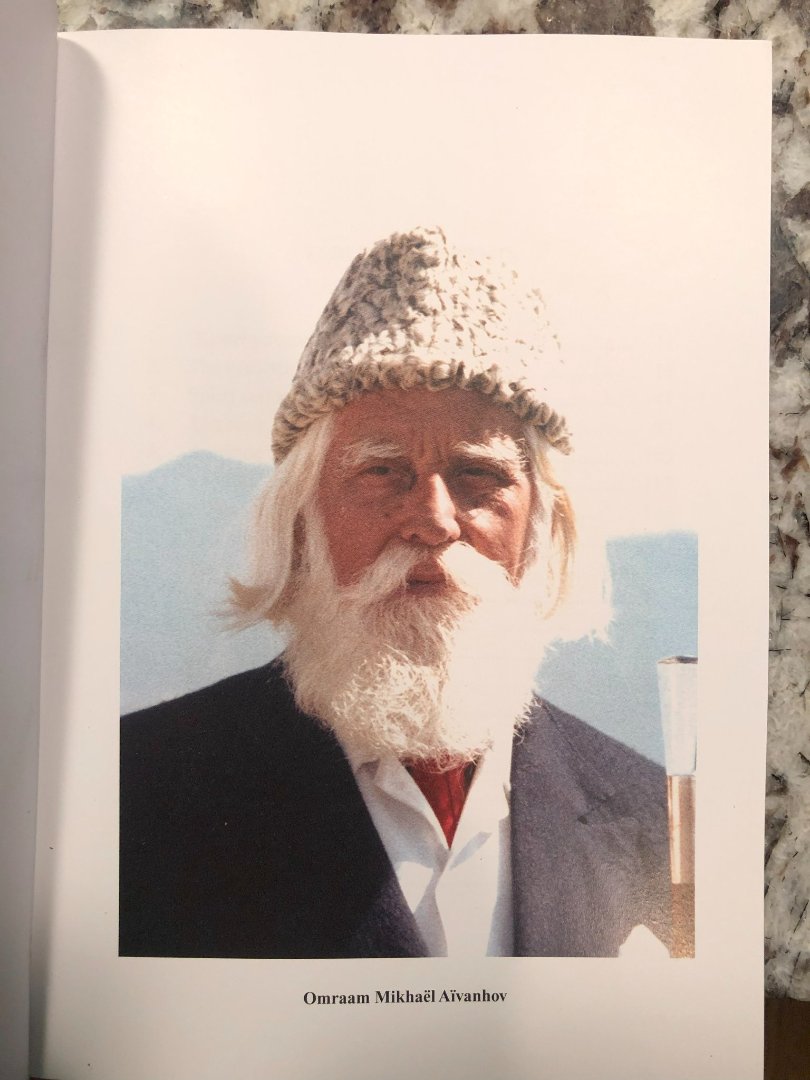
The Teacher and His Legacy
In the twentieth century, a Bulgarian teacher named Omraam Mikhaël Aïvanhov (1900–1986) created an original pedagogical framework he called the Synoptic Table. He stated explicitly: "You will not find the table that I am showing you today in any book. In fact this is the first time that it has ever been presented, and it is a summary and a synthesis of all the truths of life."
Aïvanhov studied for twenty years under Peter Deunov (Beinsa Douno), the Bulgarian spiritual teacher whose work drew from Christian mysticism, Rosicrucianism, and initiatic traditions. Sent to France in 1937 to preserve and spread these teachings, Aïvanhov taught for over fifty years, primarily through oral lectures. He took his teacher's foundation—along with wisdom from Vedanta, Kabbalah, and Hermeticism—and organized it into a practical system accessible to modern seekers.
His approach was practical rather than devotional. He discouraged personality cults and repeatedly pointed students back to the teaching itself, to nature, and to their own direct experience.
Six Bodies or Seven?
Those familiar with Theosophy, yoga, or other esoteric systems may know of a seven-body framework: physical, etheric, astral, mental, causal, buddhic, and atmic. Aïvanhov taught this system as well, particularly when discussing esoteric anatomy in depth.
However, the Synoptic Table reorganizes these seven into six functional categories for practical daily application: Physical Body, Will, Heart, Intellect, Soul, and Spirit. This is not a contradiction but a pedagogical choice—grouping the subtle bodies by their function rather than their esoteric classification. The etheric body is absorbed into the physical/will categories; the astral becomes "Heart"; the mental becomes "Intellect"; causal and buddhic aspects merge into "Soul"; and the atmic principle becomes "Spirit."
The value of the Synoptic Table lies precisely in this simplification: it answers the practical question of what each part of us needs and how to nourish it—without requiring years of esoteric study to apply.
The Synoptic Table
The six principles of human being, from densest to most subtle
| Principle | Ideal | Nourishment | Price | Activity |
|---|---|---|---|---|
| Spirit Divine Consciousness | Time, Eternity, Immortality | Freedom | Truth | Identification, Union, Creation |
| Soul Super-consciousness | Space, Immensity, The Infinite | Impersonality, Selflessness | Fusion, Dilatation, Ecstasy | Contemplation, Adoration, Prayer |
| Intellect Self-consciousness | Knowledge, Learning, Light | Thought | Wisdom | Meditation, Profound Study |
| Heart Consciousness | Joy, Happiness, Warmth | Feelings | Love | Music, Song, Poetry, Harmony |
| Will Subconscious | Domination, Power, Movement | Strength | Gestures, Breath | Breathing, Gymnastics, Dance, Paneurythmy |
| Physical Body Unconscious | Vigour, Health, Life | Food | Money | Activity, Dynamism, Work |
Why This Matters
Most modern people, despite their education and sophistication, live almost entirely in service to the physical body. We spend our days working for money to buy food, shelter, and comfort. We may add some heart-nourishment through relationships and entertainment, some intellectual stimulation through study or media. But the higher bodies—will, soul, spirit—remain largely unfed, their needs unrecognized.
This, according to the mystery school tradition, is the source of our persistent dissatisfaction. We can stuff the physical body with every comfort imaginable and still feel empty, because the soul and spirit are starving. We can accumulate knowledge without ever touching wisdom. We can be surrounded by people without experiencing love.
The Synoptic Table offers a diagnostic framework. When you feel depleted, which body is malnourished? When you feel restless, which principle is crying out for its specific activity? When something is missing despite having "everything," which level of nourishment have you neglected?
The table also reveals a profound teaching about exchange. Each level has its price—something that must be given to receive its gifts. The physical body trades money for food. But the spirit trades truth for freedom. You cannot buy your way to higher consciousness; each level has its own currency.
Using This Teaching
At Nature's Place, we find the Six Bodies framework invaluable for understanding why modern life leaves so many people feeling fragmented despite material abundance. It provides language for what is missing and direction for what to cultivate.
We do not present this as dogma but as a map—one among several valid ways of understanding human complexity. Like all maps, its value lies not in being venerated but in being used: to navigate, to locate yourself, to find what you're seeking.
The ancient instruction remains: Know Thyself. Not merely your personality or your preferences, but the full architecture of your being—from physical body to divine spirit—and what each dimension of you requires to flourish.
The table awaits your contemplation. The bodies await their proper food.
"The satisfaction of purely physical, material needs has never made human beings any happier or more contented. It is only when they begin to know themselves as they are on a higher plane that they become capable of living in true splendour."